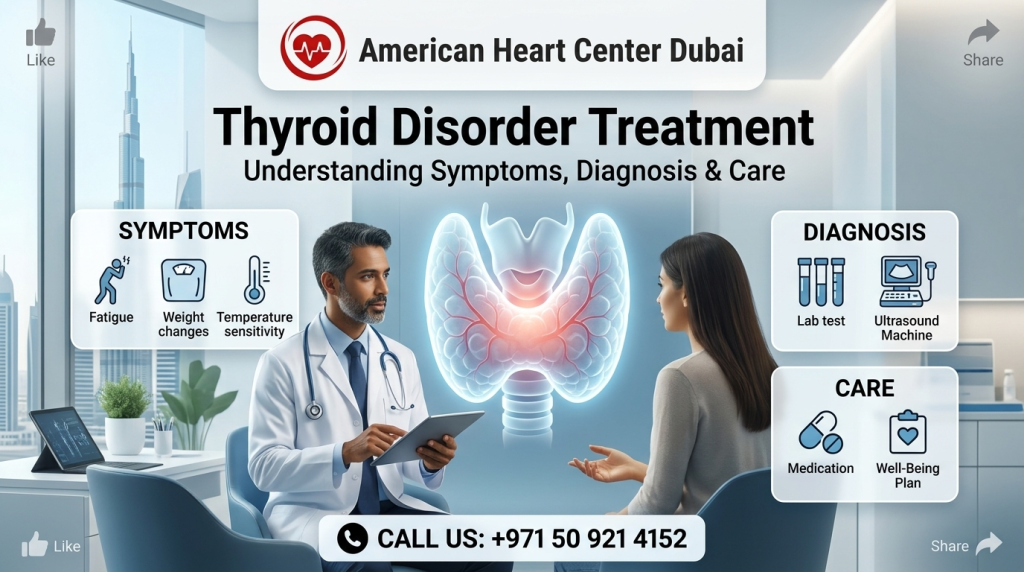
Thyroid disorder treatment is important for managing common health conditions that can affect many parts of the body, including the heart, metabolism, energy levels, and overall well-being. The thyroid gland is a small, butterfly-shaped gland located at the front of the neck. It produces hormones that help regulate important body functions.
When the thyroid produces too much or too little hormone, it can lead to conditions such as hyperthyroidism or hypothyroidism. Proper diagnosis and timely treatment can help manage symptoms and reduce the risk of complications.
At American Heart Center in Dubai, understanding the connection between thyroid health and cardiovascular health is particularly important. Changes in thyroid hormone levels can influence heart rate, blood pressure, cholesterol, and heart rhythm.
What Is a Thyroid Disorder?
A thyroid disorder occurs when the thyroid gland does not produce the right amount of thyroid hormones.
The two most common thyroid conditions are:
Hypothyroidism
Hypothyroidism occurs when the thyroid gland produces insufficient thyroid hormones. The body’s processes may slow down as a result.
Common symptoms can include:
Tiredness and low energy
- Weight gain
- Feeling unusually cold
- Dry skin
- Constipation
- Muscle weakness
- Difficulty concentrating
- Slow heart rate
- Changes in mood
Hyperthyroidism
Hyperthyroidism occurs when the thyroid gland produces excessive thyroid hormones. This can increase the body’s metabolic activity.
Possible symptoms include:
- Rapid or irregular heartbeat
- Unexplained weight loss
- Increased sweating
- Feeling unusually warm
- Nervousness or anxiety
- Shaking or tremors
- Difficulty sleeping
- Muscle weakness
- Increased appetite
Some people may have mild symptoms, while others may experience more noticeable changes.
How Thyroid Disorders Affect the Heart
Thyroid hormones have an important relationship with cardiovascular health.
Too much thyroid hormone can cause the heart to beat faster and may contribute to palpitations or abnormal heart rhythms. In some cases, untreated hyperthyroidism can increase the risk of conditions such as atrial fibrillation.
Low thyroid hormone levels can also affect cardiovascular health. Hypothyroidism may contribute to increased cholesterol levels and changes in heart function.
For this reason, people experiencing persistent changes in heart rate, palpitations, unusual fatigue, or unexplained changes in blood pressure may require an appropriate medical assessment.
How Are Thyroid Disorders Diagnosed?
Thyroid disorder treatment begins with an accurate diagnosis. A doctor may review your symptoms, medical history, and physical examination before recommending blood tests.
Common thyroid tests include:
TSH Test
The thyroid-stimulating hormone, or TSH, test is commonly used to assess thyroid function. Abnormal TSH levels may indicate that the thyroid is producing too much or too little hormone.
Free T4 Test
Free thyroxine, commonly called Free T4, can provide additional information about thyroid hormone levels.
Additional Tests
Depending on the patient’s symptoms and initial test results, a doctor may recommend additional thyroid hormone tests, antibody tests, or imaging studies.
The appropriate tests depend on the individual patient’s condition and medical history.
Thyroid Disorder Treatment Options
Treatment depends on the type of thyroid disorder, its underlying cause, severity, age, overall health, and other medical factors.
Treatment for Hypothyroidism
Hypothyroidism is commonly treated with thyroid hormone replacement medication. The goal is to restore thyroid hormone levels to an appropriate range.
Patients taking thyroid medication may require regular blood tests so their doctor can determine whether the dose needs adjustment.
Treatment should always follow medical advice. Patients should not change or stop prescribed medication without consulting their healthcare professional.
Treatment for Hyperthyroidism
Hyperthyroidism has several possible treatment approaches. Depending on the cause and individual circumstances, treatment may include medication, radioactive iodine treatment, or surgery.
Doctors may also recommend treatment to manage symptoms such as a fast heartbeat while the underlying thyroid condition is being addressed.
Why Regular Monitoring Matters
Thyroid hormone levels can change over time. Regular follow-up can help doctors determine whether treatment is working effectively.
Monitoring may be especially important for people who also have cardiovascular risk factors or existing heart conditions.
Keeping thyroid hormone levels within the appropriate range can support overall health and may help reduce the cardiovascular effects associated with uncontrolled thyroid disorders.
When Should You See a Doctor?
You should consider speaking with a healthcare professional if you experience persistent symptoms that could be related to thyroid dysfunction.
Seek medical assessment for symptoms such as unexplained weight changes, ongoing fatigue, persistent rapid heartbeat, palpitations, tremors, unusual sensitivity to cold or heat, or significant changes in energy and mood.
A doctor can determine whether thyroid testing or further evaluation is appropriate.
If you experience severe chest pain, significant difficulty breathing, fainting, or a sudden severe change in your heartbeat, seek urgent medical attention.
Thyroid Health and Cardiovascular Care in Dubai
Thyroid disorders can involve more than changes in weight or energy. Because thyroid hormones can influence heart rate, blood pressure, and cholesterol, thyroid health can also be relevant to cardiovascular assessment.
At American Heart Center in Dubai, cardiovascular evaluation can help assess symptoms such as palpitations, changes in heart rate, and other concerns that may require further medical investigation.
Depending on the patient’s needs, cardiovascular assessment may include services such as ECG, echocardiography, blood pressure monitoring, and other appropriate investigations.
Take Thyroid Symptoms Seriously
Thyroid disorders are often manageable when properly diagnosed and treated. However, symptoms can sometimes develop gradually and may be mistaken for stress, tiredness, or normal changes in daily life.
Early medical evaluation can help identify the underlying cause and guide appropriate treatment. If thyroid dysfunction is suspected, your doctor can recommend suitable tests and explain the next steps based on your results.
American Heart Center in Dubai provides cardiovascular evaluation and diagnostic services for patients concerned about heart health. If you are experiencing persistent palpitations, changes in heart rate, unexplained fatigue, or other cardiovascular symptoms, professional medical evaluation can help determine the appropriate course of action.
Frequently Asked Questions
Can thyroid problems affect the heart?
Yes. Abnormal thyroid hormone levels can affect heart rate, heart rhythm, blood pressure, and cholesterol.
What blood test checks thyroid function?
TSH is commonly used as an initial thyroid function test. Doctors may also recommend Free T4 and other tests depending on the patient’s situation.
Can hypothyroidism cause a slow heartbeat?
Hypothyroidism can contribute to a slower heart rate in some people, although symptoms and effects vary between individuals.
Can hyperthyroidism cause palpitations?
Yes. Excess thyroid hormone can increase heart rate and may contribute to palpitations or abnormal heart rhythms.
Is thyroid disorder treatment lifelong?
It depends on the type and cause of the thyroid disorder. Some people require long-term treatment, while others may need treatment for a limited period. Your doctor can advise based on your diagnosis.