
Your heart works tirelessly every second of your life, pumping oxygen-rich blood throughout your body. However, many heart conditions remain hidden until they become serious. A Stress Test, also known as a Treadmill Test (TMT) or Exercise Stress Test, is one of the most effective diagnostic procedures for evaluating how well your heart performs during physical activity.
At American Heart Center, we provide advanced Stress Test (TMT) services using modern technology and experienced cardiologists to diagnose heart conditions accurately and help patients maintain long-term cardiovascular health.
What Is a Stress Test (Treadmill Test / TMT)?
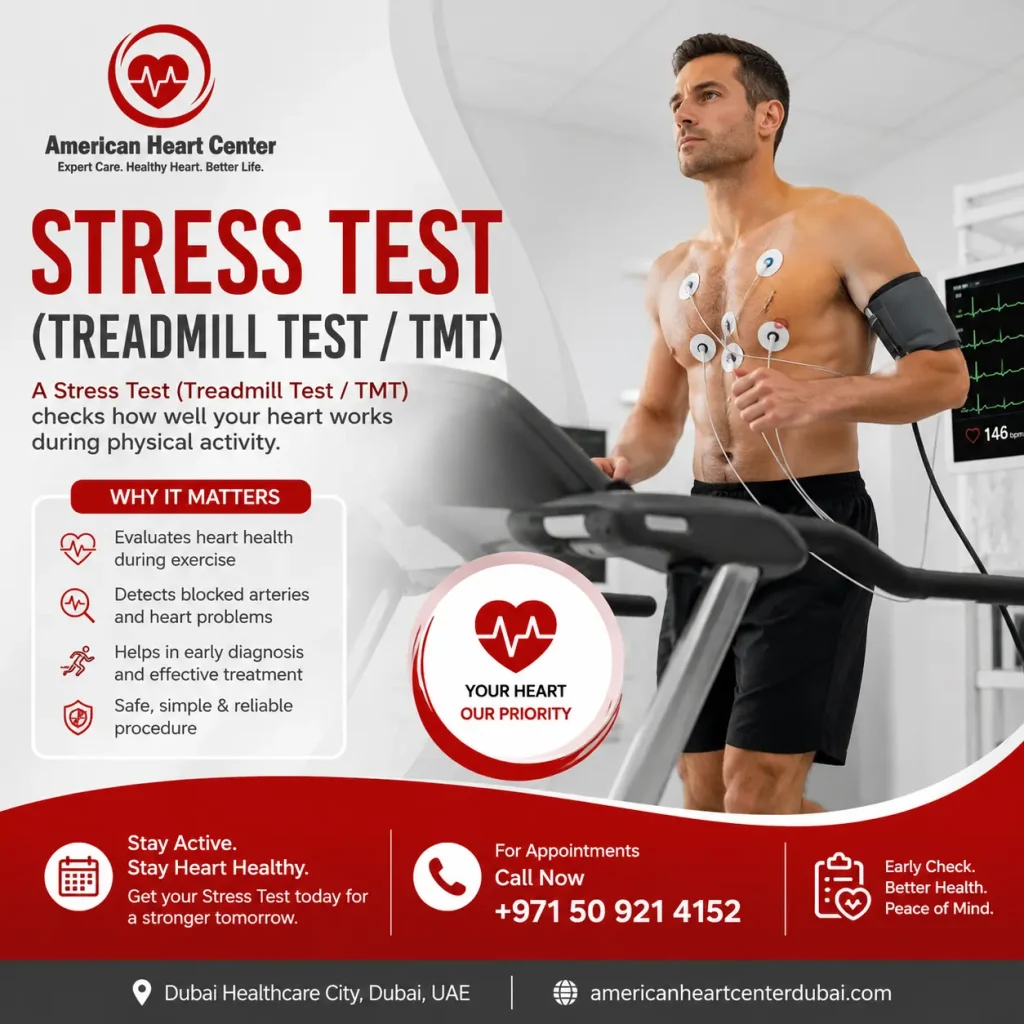
A Stress Test (TMT) is a non-invasive cardiac diagnostic procedure that evaluates your heart’s performance while your body is under physical stress. During the test, you walk on a treadmill while your heart rate, blood pressure, breathing, and ECG (electrocardiogram) are continuously monitored.
Unlike an ECG performed while you’re resting, a Stress Test reveals how your heart responds when it needs to work harder. This makes it an excellent tool for identifying heart problems that may not appear during rest.
Many heart conditions only become noticeable when your heart is working harder. Physical activity increases your heart’s demand for oxygen, and if the blood supply is restricted due to narrowed arteries, symptoms or ECG changes can appear.
A Stress Test helps doctors:
- Detect coronary artery disease
- Evaluate chest pain
- Diagnose irregular heart rhythms
- Assess exercise tolerance
- Monitor heart function after treatment
- Determine safe exercise levels
- Evaluate unexplained shortness of breath
Early detection allows treatment before a serious cardiac event occurs.
Who Should Consider a Stress Test?
Your cardiologist may recommend a Stress Test if you have symptoms or risk factors for heart disease.
Common reasons include:
Chest Pain
Recurring chest discomfort, pressure, or tightness during physical activity may indicate reduced blood flow to the heart.
Shortness of Breath
Difficulty breathing during mild exercise may suggest underlying cardiovascular disease.
Dizziness or Fainting
Unexplained dizziness while walking or exercising may require cardiac evaluation.
Palpitations
A racing or irregular heartbeat can sometimes become more evident during exercise.
High Blood Pressure
Long-standing hypertension increases the risk of heart disease.
Diabetes
Diabetes significantly increases the likelihood of coronary artery disease.
High Cholesterol
Elevated cholesterol contributes to plaque buildup in the arteries.
Family History
Individuals with close relatives who have experienced heart disease at an early age should undergo regular heart screening.
How Does a Treadmill Test Work?
The procedure is simple, safe, and performed under the supervision of trained healthcare professionals.
Step 1: Preparation
Small ECG electrodes are attached to your chest to monitor your heart rhythm.
Your blood pressure and resting heart rate are recorded.
Step 2: Walking on the Treadmill
You begin walking at a comfortable pace.
Every few minutes:
- The treadmill speed increases.
- The incline becomes steeper.
- Your heart works harder.
Step 3: Continuous Monitoring
Throughout the test, your cardiologist monitors:
- Heart rate
- ECG changes
- Blood pressure
- Oxygen demand
- Symptoms like chest pain or dizziness
Your heart works tirelessly every second of your life, pumping oxygen-rich blood throughout your body. However, many heart conditions remain hidden until they become serious. A Stress Test, also known as a Treadmill Test (TMT) or Exercise Stress Test, is one of the most effective diagnostic procedures for evaluating how well your heart performs during physical activity.
At American Heart Center, we provide advanced Stress Test (TMT) services using modern technology and experienced cardiologists to diagnose heart conditions accurately and help patients maintain long-term cardiovascular health.
What Is a Stress Test (Treadmill Test / TMT)?
A Stress Test (TMT) is a non-invasive cardiac diagnostic procedure that evaluates your heart’s performance while your body is under physical stress. During the test, you walk on a treadmill while your heart rate, blood pressure, breathing, and ECG (electrocardiogram) are continuously monitored.
Unlike an ECG performed while you’re resting, a Stress Test reveals how your heart responds when it needs to work harder. This makes it an excellent tool for identifying heart problems that may not appear during rest.
Why Is a Stress Test Important?
Many heart conditions only become noticeable when your heart is working harder. Physical activity increases your heart’s demand for oxygen, and if the blood supply is restricted due to narrowed arteries, symptoms or ECG changes can appear.
A Stress Test helps doctors:
- Detect coronary artery disease
- Evaluate chest pain
- Diagnose irregular heart rhythms
- Assess exercise tolerance
- Monitor heart function after treatment
- Determine safe exercise levels
- Evaluate unexplained shortness of breath
Early detection allows treatment before a serious cardiac event occurs.
Who Should Consider a Stress Test?
Your cardiologist may recommend a Stress Test if you have symptoms or risk factors for heart disease.
Common reasons include:
Chest Pain
Recurring chest discomfort, pressure, or tightness during physical activity may indicate reduced blood flow to the heart.
Shortness of Breath
Difficulty breathing during mild exercise may suggest underlying cardiovascular disease.
Dizziness or Fainting
Unexplained dizziness while walking or exercising may require cardiac evaluation.
Palpitations
A racing or irregular heartbeat can sometimes become more evident during exercise.
High Blood Pressure
Long-standing hypertension increases the risk of heart disease.
Diabetes
Diabetes significantly increases the likelihood of coronary artery disease.
High Cholesterol
Elevated cholesterol contributes to plaque buildup in the arteries.
Family History
Individuals with close relatives who have experienced heart disease at an early age should undergo regular heart screening.
How Does a Treadmill Test Work?
The procedure is simple, safe, and performed under the supervision of trained healthcare professionals.
Step 1: Preparation
Small ECG electrodes are attached to your chest to monitor your heart rhythm.
Your blood pressure and resting heart rate are recorded.
Step 2: Walking on the Treadmill
You begin walking at a comfortable pace.
Every few minutes:
- The treadmill speed increases.
- The incline becomes steeper.
- Your heart works harder.
Step 3: Continuous Monitoring
Throughout the test, your cardiologist monitors:
- Heart rate
- ECG changes
- Blood pressure
- Oxygen demand
- Symptoms like chest pain or dizziness
Step 4: Recovery Phase
After exercise, you continue being monitored until your heart rate returns to normal.
The entire procedure usually takes between 30 and 45 minutes, while the actual exercise lasts approximately 8 to 15 minutes, depending on your fitness level.
What Can a Stress Test Detect?
A Stress Test provides valuable information about heart function.
It helps diagnose:
Coronary Artery Disease (CAD)
Blocked or narrowed coronary arteries reduce blood flow during exercise.
Arrhythmias
Abnormal heart rhythms may appear only during physical exertion.
Reduced Blood Supply
The test identifies areas of the heart receiving insufficient oxygen.
Exercise Capacity
Doctors evaluate how efficiently your heart handles physical activity.
Previous Heart Attack Damage
A Stress Test can help determine how well the heart has recovered after a heart attack.
Benefits of a Stress Test
The Treadmill Test offers several important advantages.
Early Detection
Heart disease can often be diagnosed before symptoms become severe.
Non-Invasive
No surgery, injections, or hospitalization are required.
Safe Procedure
The test is closely monitored by experienced cardiac professionals.
Accurate Diagnosis
Stress testing provides valuable information that resting ECGs cannot.
Personalized Treatment
Results help cardiologists recommend medications, lifestyle changes, or additional investigations if necessary.
Preparing for Your Stress Test
To ensure accurate results, follow these simple guidelines.
Wear Comfortable Clothing
Choose loose-fitting clothes and walking shoes.
Avoid Heavy Meals
Do not eat a large meal for 2–3 hours before the test.
Avoid Caffeine
Coffee, tea, energy drinks, and certain soft drinks may interfere with the results.
Ask About Medications
Some heart medications may need temporary adjustment before testing. Always follow your doctor’s instructions.
Stay Hydrated
Drink water unless advised otherwise.
Is the Test Safe?
Yes.
Stress Tests are considered extremely safe when performed under medical supervision.
During the procedure, specialists continuously monitor:
- ECG
- Blood pressure
- Heart rhythm
- Symptoms
The test is immediately stopped if any concerning signs develop.
Although minor fatigue or shortness of breath is common, serious complications are very rare.
What Happens After the Test?
Once the exercise portion is complete:
- Your heart rate gradually returns to normal.
- Blood pressure is monitored.
- ECG recordings are reviewed.
- The cardiologist analyzes the results.
Depending on the findings, your doctor may recommend:
- Lifestyle modifications
- Medication adjustments
- Echocardiography
- CT Coronary Angiography
- Coronary Angiography
- Regular follow-up
Understanding Your Results
A Stress Test may be:
Normal
Your heart receives enough blood supply during exercise.
Abnormal
The ECG may indicate reduced blood flow or abnormal rhythms that require additional evaluation.
Inconclusive
Sometimes additional imaging tests are recommended for a clearer diagnosis.
Your cardiologist will explain your results in detail and discuss the next steps.
Lifestyle Tips for a Healthy Heart
A Stress Test is only one part of maintaining good cardiovascular health.
To reduce your risk of heart disease:
- Exercise regularly.
- Eat a balanced diet rich in fruits, vegetables, and whole grains.
- Maintain a healthy weight.
- Stop smoking.
- Control blood pressure.
- Manage diabetes effectively.
- Reduce stress.
- Sleep 7–8 hours every night.
- Limit salt and processed foods.
- Schedule regular heart checkups.
Healthy lifestyle habits can significantly reduce your risk of heart attack and stroke.
Why Choose American Heart Center?
At American Heart Center, we are committed to providing comprehensive cardiac care using advanced diagnostic technology and personalized treatment plans.
Our experienced cardiologists ensure every patient receives compassionate care in a comfortable environment. Whether you need a routine heart screening or evaluation for symptoms like chest pain or shortness of breath, our team is here to help you achieve better heart health.
Our services include:
- Stress Test (Treadmill Test / TMT)
- ECG
- Echocardiography
- Holter Monitoring
- Blood Pressure Monitoring
- Cardiology Consultation
- Preventive Heart Checkups
- Comprehensive Cardiac Diagnostics
We focus on early detection, accurate diagnosis, and effective treatment to help you live a healthier life.
Book Your Stress Test Today
Heart disease often develops silently, making early diagnosis essential. A Stress Test (Treadmill Test / TMT) is a reliable and effective way to evaluate your heart’s performance during physical activity and identify potential problems before they become serious.
If you have chest pain, shortness of breath, dizziness, a family history of heart disease, or simply want a preventive heart assessment, don’t wait. Schedule your Stress Test at American Heart Center and take an important step toward protecting your heart and overall well-being.