
Heart health is an important part of overall well-being, and regular health assessments can help identify potential concerns before they become serious. Routine Blood Tests are among the most useful tools doctors use to understand what is happening inside the body. From cholesterol and blood sugar to kidney function and other important health markers, blood tests can provide valuable information that supports preventive care.
For people living in Dubai, combining routine health screening with expert medical guidance can make it easier to understand cardiovascular risk factors and take timely action. At American Heart Center, patients can access comprehensive healthcare services supported by experienced medical professionals and a focus on individualized care.
What Are Routine Blood Tests?
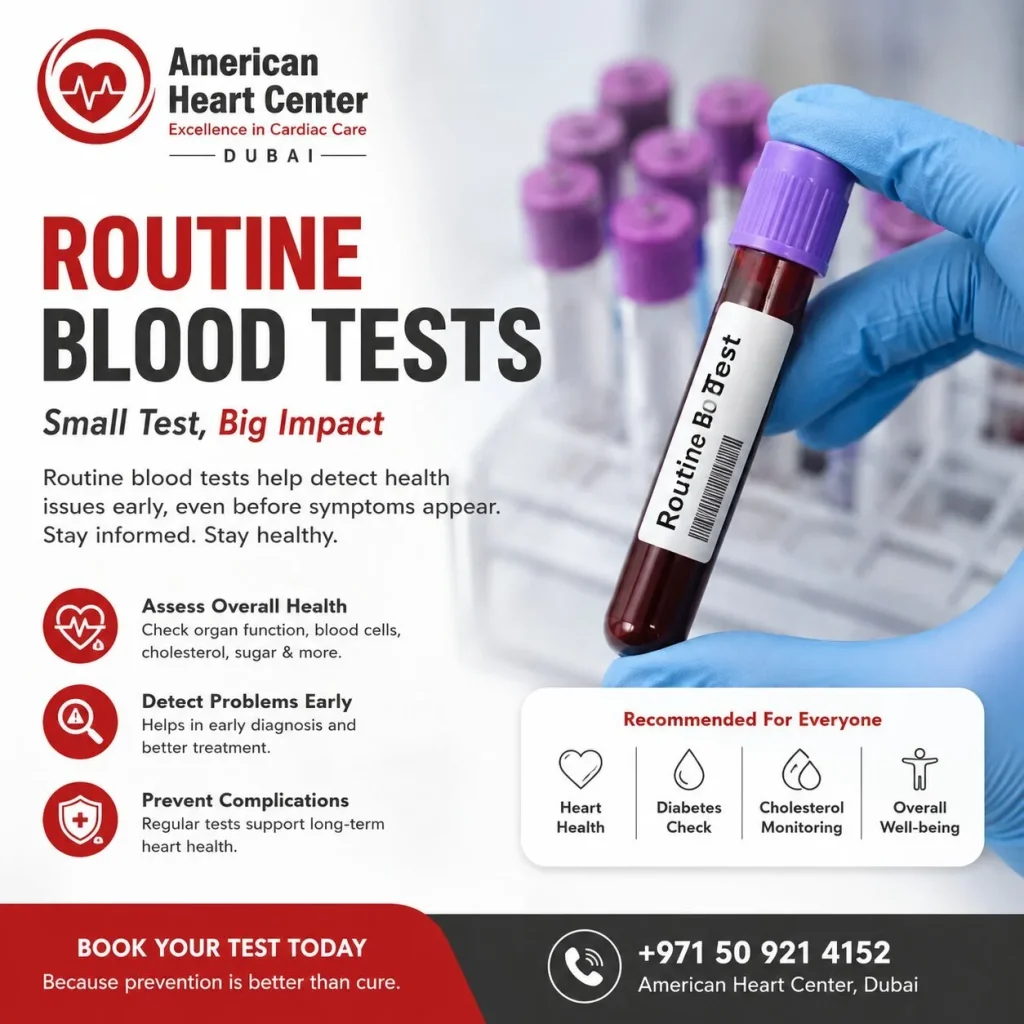
Doctors use Routine Blood Tests to evaluate different aspects of your health. Depending on your age, medical history, lifestyle, symptoms, and risk factors, a doctor may recommend different blood tests as part of a regular health assessment.
Common tests may evaluate:
- Cholesterol and lipid levels
- Blood glucose levels
- Complete blood count
- Kidney and liver function
- Electrolytes
- Certain markers associated with inflammation
- Other health indicators recommended by your doctor
These tests do not necessarily mean that a person has a health problem.
Doctors often use them for preventive healthcare to establish a baseline and monitor changes over time.
Why Routine Blood Tests Matter for Heart Health
Your blood can reveal important information about several factors associated with cardiovascular health. For example, elevated cholesterol levels may contribute to the development of plaque in the arteries, while high blood glucose can be associated with an increased risk of cardiovascular disease.
Blood pressure, cholesterol, blood sugar, weight, lifestyle, family history, and other factors can all contribute to an individual’s overall cardiovascular risk. Routine Blood Tests can therefore be an important part of a broader preventive approach.
Regular testing may help your doctor:
- Identify elevated cholesterol levels
- Monitor blood glucose
- Assess certain aspects of kidney and liver function
- Track changes in important health markers
- Evaluate cardiovascular risk factors
- Decide whether additional testing or specialist assessment is appropriate
However, blood tests are only one part of a complete health evaluation. A doctor considers your results alongside your symptoms, medical history, physical examination, and lifestyle.
Routine Blood Tests and Cardiology in Dubai
For individuals concerned about their cardiovascular health, routine laboratory screening can work alongside specialist evaluation. Cardiology in Dubai involves the diagnosis, prevention, monitoring, and management of conditions affecting the heart and blood vessels.
A cardiology consultation may be particularly appropriate if you have risk factors such as high cholesterol, diabetes, high blood pressure, obesity, smoking history, a strong family history of heart disease, or previous cardiovascular concerns.
A cardiology consultant can review relevant blood-test results and determine whether further assessment is needed. Depending on the individual’s circumstances, a doctor may recommend additional investigations or ongoing monitoring.
The important point is that test results should not be interpreted in isolation. A result outside the laboratory’s reference range does not automatically mean that you have heart disease, just as a normal result does not guarantee that every aspect of cardiovascular health is perfect.
Who Should Consider Routine Blood Tests?
The frequency and type of blood testing should be determined according to individual needs. Some people may require more regular monitoring because of existing health conditions or risk factors, while others may only need testing during routine checkups.
Routine Blood Tests may be especially useful for adults who:
- Want to monitor their general health
- Have a family history of cardiovascular disease
- Have high cholesterol or blood pressure
- Have diabetes or concerns about blood sugar
- Are taking medicines that require monitoring
- Have experienced unexplained symptoms
- Are undergoing a regular preventive health assessment
- Want to understand their cardiovascular risk factors
If you are unsure which tests are appropriate, speaking with a qualified consultant can help you avoid unnecessary testing while ensuring important health concerns are not overlooked.For example, high cholesterol can contribute to plaque buildup in the arteries, while high blood glucose can increase the risk of cardiovascular disease.
Understanding Your Blood Test Results
Receiving a laboratory report can sometimes feel confusing because it may contain numerous measurements, reference ranges, and abbreviations. It is important not to interpret individual numbers without considering the wider clinical picture.
For example, cholesterol results may include different measurements such as total cholesterol, HDL cholesterol, LDL cholesterol, and triglycerides. Blood glucose can also be evaluated in different ways depending on the reason for testing.
Your doctor can explain what your results mean for your particular situation and whether lifestyle changes, repeat testing, or additional evaluation may be appropriate.
A consultant may also consider factors such as age, family history, diet, physical activity, medications, smoking, blood pressure, and previous medical results when assessing cardiovascular risk.
Preventive Heart Care Is About More Than Testing
Routine Blood Tests are valuable, but maintaining heart health requires a broader approach. A heart-healthy lifestyle generally includes regular physical activity, a balanced diet, adequate sleep, maintaining a healthy weight, avoiding tobacco, and managing conditions such as high blood pressure and diabetes.
Regular medical checkups can also help identify changes early. When blood tests are combined with appropriate clinical assessment, they can contribute to a more complete picture of your health.
People in Dubai looking for professional cardiovascular guidance can consider consulting an experienced cardiology consultant when they have concerns about heart health or cardiovascular risk factors.
When Should You Speak With a Doctor?
Routine screening is useful even when you feel healthy, but certain symptoms should receive prompt medical attention.
Do not ignore chest discomfort, unexplained shortness of breath, fainting, persistent palpitations, unusual fatigue, or other concerning symptoms.
Your doctor can determine whether you need Routine Blood Tests and further cardiovascular evaluation
At American Heart Center, professional medical assessment can help patients better understand their health and make informed decisions about preventive care and cardiovascular evaluation.
Take a Proactive Approach to Your Health
Routine Blood Tests can provide useful information about cholesterol, glucose, and other health markers that may influence cardiovascular risk. When combined with professional consultation, healthy lifestyle choices, and appropriate screening, they can become an important part of preventive healthcare.
Whether you are arranging a general health assessment or looking for cardiology in Dubai, understanding your individual risk factors is an important first step. Regular monitoring allows you and your healthcare provider to identify changes and make informed decisions about your health.
For personalized guidance and cardiovascular care, consider consulting the experienced team at American Heart Center Dubai and discussing which routine tests and health assessments may be suitable for you.