
A Complete Guide to Heart Rhythm Testing
Heart health is an important part of maintaining overall well-being. When symptoms such as chest discomfort, palpitations, dizziness, or unexplained shortness of breath occur, doctors may recommend diagnostic testing to better understand how the heart is functioning. The heart’s electrical activity is evaluated using a Heart ECG Test Dubai, one of the most commonly used tests. An ECG, or electrocardiogram, records the electrical signals that control the heartbeat. The test is quick, non-invasive, and can provide doctors with useful information about heart rate and rhythm. A Heart ECG Test Dubai may be recommended to evaluate your heart’s electrical activity
What Is a Heart ECG Test?
A Heart ECG Test measures the electrical activity generated by the heart as it beats. The heart produces electrical signals that coordinate its contractions, allowing blood to circulate throughout the body.
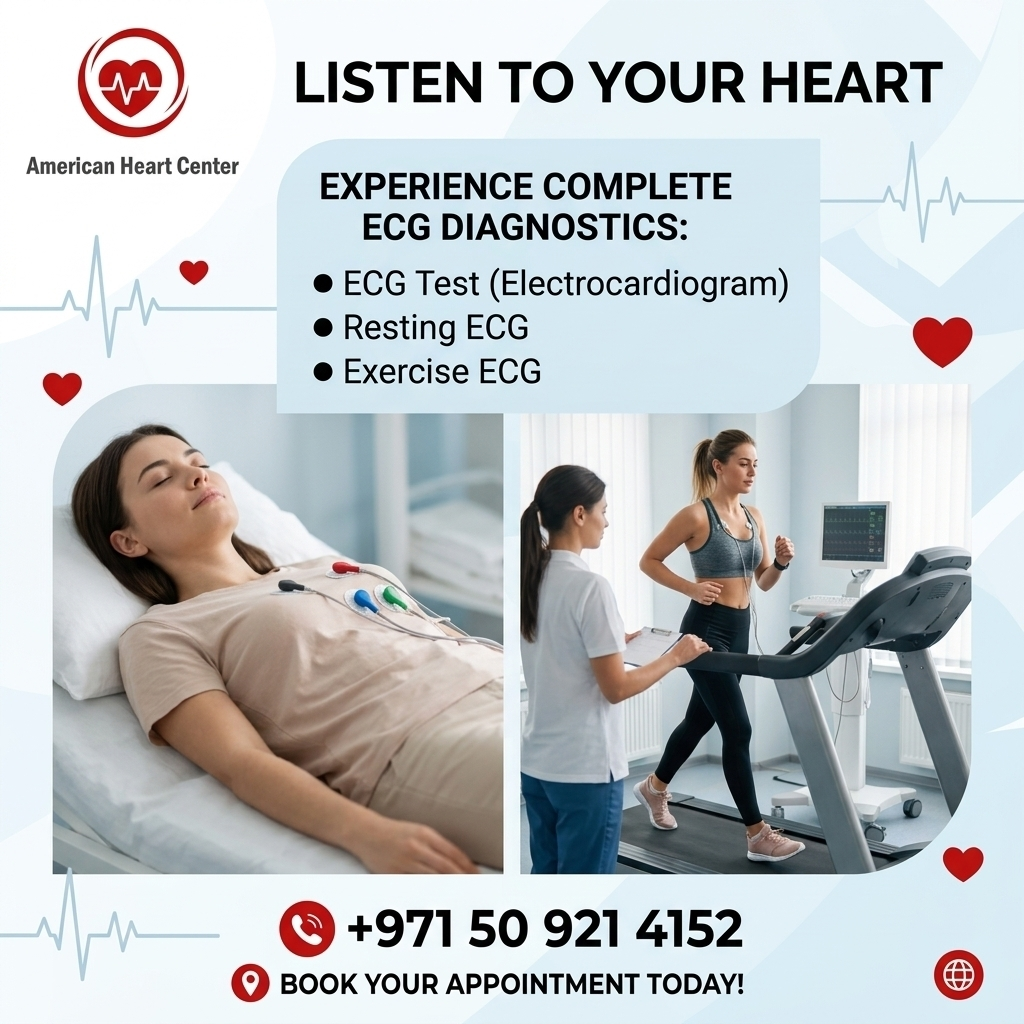
During the test, healthcare professionals place small adhesive electrodes on specific areas of the chest and, depending on the ECG system, the arms and legs. These electrodes connect to an ECG machine that records the heart’s electrical signals.
The resulting tracing allows a doctor to assess the heart’s rate and rhythm and look for electrical patterns that may require further investigation.
An ECG does not involve needles or surgery, making it a straightforward diagnostic test for many patients.
Why Do Doctors Recommend a Heart ECG Test Dubai?
Doctors may recommend a Heart ECG Test Dubai for several reasons. Some patients undergo testing because they experience symptoms, while others may have risk factors or a medical history that makes cardiovascular assessment appropriate.
Common reasons for an ECG include:
- Chest discomfort or chest pain
- Persistent or irregular heartbeats
- Palpitations
- Dizziness
- Fainting or near-fainting
- Unexplained shortness of breath
- Unusual fatigue
- A history of cardiovascular disease
- Monitoring an existing heart condition
- Assessment before certain medical procedures
An ECG can give doctors important information that helps them decide whether additional testing is necessary.
What Can an ECG Show?
An ECG can provide information about the heart’s electrical activity, including heart rate and rhythm. It may also help doctors identify patterns that could indicate an abnormal heart rhythm or other electrical changes.
However, an ECG is not designed to diagnose every heart condition. Doctors interpret the results alongside your symptoms, medical history, physical examination, and other relevant investigations.
If an ECG produces an unusual result, your doctor may recommend additional tests to obtain more information. These could include an echocardiogram, stress test, Holter monitoring, blood tests, or other cardiovascular investigations.
What Happens During an ECG Test in Dubai?
A typical ECG test in Dubai is simple and generally takes only a few minutes.
Before the test begins, you may need to expose the upper part of your body so the healthcare professional can position the electrodes correctly. Small adhesive electrodes are placed on the skin at specific locations.
You will usually lie down and remain still while the ECG machine records your heart’s electrical activity. It is important to relax and avoid talking or moving during the recording because movement can affect the tracing.
Once the recording is complete, the electrodes are removed. You can normally return to your regular activities immediately unless your doctor gives you different instructions.
Is a Heart ECG Test Painful?
A standard ECG is generally painless. The electrodes simply attach to the skin and detect electrical signals from the heart.
Some people may experience minor discomfort when a healthcare professional removes the adhesive electrodes, particularly if they have sensitive skin. However, the test itself does not involve injections, incisions, or radiation.
Because an ECG is simple and non-invasive, doctors widely use ECG testing in cardiovascular care.
Who May Benefit From ECG Screening?
Not everyone needs an ECG routinely. A doctor determines whether testing is appropriate based on symptoms, age, medical history, risk factors, and the purpose of the evaluation.
People may be advised to discuss ECG screening with a healthcare professional if they have:
- High blood pressure
- High cholesterol
- Diabetes
- A family history of heart disease
- Previous cardiovascular problems
- Smoking history
- Persistent palpitations
- Episodes of dizziness or fainting
- Unexplained chest discomfort
- Unexplained shortness of breath
An ECG may also be useful when a doctor wants to establish additional information about cardiovascular health.
ECG and Cardiology in Dubai
An ECG is often an important part of cardiology in Dubai because it gives healthcare professionals information about the heart’s electrical activity. However, the ECG should be considered as one component of a complete cardiovascular evaluation.
A cardiology consultant may review your symptoms, medical history, blood pressure, cholesterol levels, medications, lifestyle factors, and ECG results when assessing your cardiovascular health.
If your symptoms or test results indicate the need for further evaluation, your doctor can recommend additional investigations.
The goal is not simply to perform a test but to understand what the results mean for your individual health.
Why Professional Interpretation Matters
ECG results can contain technical information that is difficult to understand without medical training. A result that appears unusual does not necessarily mean that a person has a serious heart condition.
Similarly, a normal ECG does not automatically rule out every possible cardiovascular problem.
For this reason, a qualified healthcare professional should interpret the ECG in combination with your overall clinical picture. Your doctor can explain the results and determine whether additional evaluation or monitoring is appropriate.
When Should You Seek Medical Advice?
Certain symptoms should never be ignored. If you experience persistent or severe chest discomfort, difficulty breathing, fainting, sudden weakness, or significant changes in your heartbeat, seek prompt medical evaluation.
Your doctor can determine whether you need a Heart ECG Test Dubai, another diagnostic test, or a broader cardiovascular assessment.
Do not rely on an ECG alone to determine the cause of concerning symptoms. Professional medical assessment remains essential.
Supporting Better Heart Health
An ECG is a useful diagnostic tool, but maintaining cardiovascular health involves more than testing. Regular physical activity, a balanced diet, maintaining a healthy weight, avoiding tobacco, managing blood pressure and cholesterol, and attending appropriate health checkups can all support better heart health.
If you have cardiovascular risk factors, regular consultation with a healthcare professional can help you understand your individual risk and determine which assessments may be appropriate.
Get Professional Heart Care in Dubai
A Heart ECG Test Dubai can provide valuable information about heart rate, rhythm, and electrical activity. Because the test is quick and non-invasive, doctors commonly use it when evaluating cardiovascular symptoms and risk factors.
Whether you are experiencing palpitations, dizziness, chest discomfort, or unexplained shortness of breath, speaking with a qualified medical professional is an important first step. A doctor can determine whether an ECG in Dubai, blood tests, imaging, or another cardiovascular assessment is appropriate for your situation.
For professional heart care and cardiovascular evaluation, American Heart Center Dubai can help patients understand their symptoms, diagnostic options, and appropriate next steps toward better heart health.