
Adult Asthma Management in Dubai
Asthma is a chronic respiratory condition that affects millions of adults worldwide, causing inflammation and narrowing of the airways. While asthma cannot always be cured, it can be effectively controlled with proper diagnosis, personalized treatment, and regular follow-up care. If left unmanaged, asthma can interfere with daily activities, reduce quality of life, and lead to severe asthma attacks requiring emergency medical attention. At American Heart Center, our experienced pulmonologists provide comprehensive adult asthma management in Dubai, helping patients breathe easier and live healthier lives. Using advanced diagnostic techniques and evidence-based treatments, we develop personalized asthma care plans tailored to each individual’s needs.
Whether you experience occasional wheezing or frequent asthma attacks, early diagnosis and professional asthma treatment can significantly improve your respiratory health.
What Is Adult Asthma?
Adult asthma is a chronic lung disease that causes the airways to become inflamed, swollen, and overly sensitive to various triggers. During an asthma flare-up, the muscles around the airways tighten, excess mucus is produced, and breathing becomes difficult.
Although asthma often begins in childhood, many people develop adult-onset asthma later in life. Symptoms may appear suddenly or gradually and can worsen without appropriate treatment.
Common Symptoms of Adult Asthma
Recognizing asthma symptoms early is essential for effective treatment. Common symptoms include:
- Persistent coughing, especially at night
- Wheezing while breathing
- Shortness of breath
- Chest tightness or discomfort
- Difficulty exercising
- Fatigue caused by breathing problems
- Frequent respiratory infections
- Interrupted sleep due to coughing or wheezing
Symptoms vary from person to person. Some adults experience occasional symptoms, while others have daily breathing difficulties that require ongoing medical management.
Causes of Adult Asthma
The exact cause of asthma remains unknown, but several factors can increase the risk of developing the condition.
Common causes include:
- Family history of asthma
- Environmental allergies
- Air pollution
- Cigarette smoke
- Workplace exposure to chemicals
- Dust and mold
- Viral respiratory infections
- Obesity
- Chronic sinus problems
- Hormonal changes
Understanding the underlying cause helps pulmonologists create a personalized treatment strategy.
Common Asthma Triggers
Avoiding asthma triggers is one of the most important aspects of long-term asthma management.
Allergens
- Dust mites
- Pollen
- Mold spores
- Pet dander
Air Pollution
Vehicle emissions, industrial pollution, and smoke can irritate sensitive airways.
Weather Changes
Cold air, humidity, and sudden temperature changes often trigger asthma symptoms.
Respiratory Infections
Common colds, influenza, and viral infections frequently worsen asthma.
Exercise
Some adults develop exercise-induced asthma during physical activity.
Strong Smells
Perfumes, cleaning products, paints, and chemicals may trigger breathing difficulties.
Stress
Anxiety and emotional stress can increase asthma symptoms in some individuals.
How Adult Asthma Is Diagnosed
At American Heart Center, diagnosing asthma involves a comprehensive evaluation to determine the severity of your condition and identify potential triggers.
Our diagnostic process includes:
Medical History
Your doctor reviews your symptoms, allergies, medications, family history, and lifestyle.
Physical Examination
A detailed examination helps assess lung function and overall respiratory health.
Spirometry Test
Spirometry measures lung capacity and airflow, making it one of the most reliable tests for diagnosing asthma.
Peak Flow Measurement
Peak flow testing helps monitor airflow obstruction and asthma control over time.
Allergy Testing
Identifying allergic triggers allows patients to avoid factors that worsen symptoms.
Chest Imaging
Chest X-rays or additional imaging studies may be recommended to rule out other respiratory conditions.
Adult Asthma Treatment in Dubai
Effective asthma treatment focuses on reducing airway inflammation, preventing asthma attacks, and improving daily quality of life.
Quick-Relief Inhalers
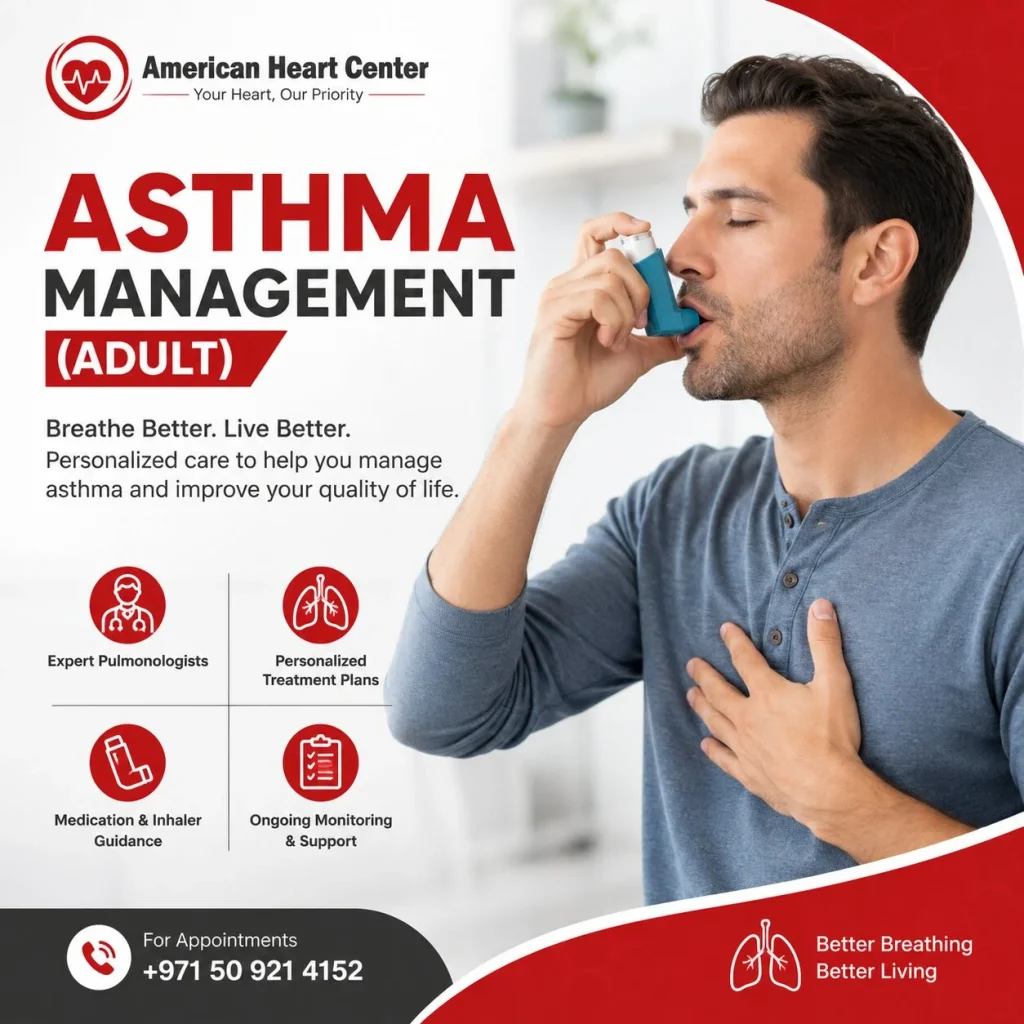
Rescue inhalers provide rapid relief during asthma attacks by relaxing airway muscles and improving airflow.
These medications should always be available for emergency use.
Long-Term Controller Medications
Controller medications reduce inflammation and help prevent asthma symptoms.
Depending on your condition, your pulmonologist may prescribe:
- Inhaled corticosteroids
- Long-acting bronchodilators
- Combination inhalers
- Leukotriene modifiers
- Biologic therapies for severe asthma
All medications should be taken exactly as prescribed.
Personalized Asthma Action Plan
Every patient receives an individualized asthma management plan that includes:
- Daily medication schedule
- Trigger avoidance strategies
- Emergency action steps
- Symptom monitoring
- Regular follow-up appointments
A personalized asthma action plan significantly reduces the risk of severe asthma attacks.
Lifestyle Tips for Better Asthma Control
Lifestyle modifications play an important role in managing asthma effectively.
Quit Smoking
Smoking damages the lungs and increases the severity of asthma symptoms.
Exercise Safely
Regular physical activity strengthens the lungs when performed under medical guidance.
Maintain a Healthy Weight
Excess body weight increases breathing difficulties and asthma complications.
Eat a Nutritious Diet
Fresh fruits, vegetables, lean proteins, and foods rich in antioxidants support lung health.
Stay Hydrated
Drinking enough water helps keep mucus thinner and easier to clear.
Reduce Stress
Relaxation techniques such as meditation, yoga, and breathing exercises may help reduce asthma flare-ups.
Preventing Asthma Attacks
Many asthma attacks can be prevented with proper medical care and lifestyle management.
To reduce your risk:
- Take medications exactly as prescribed.
- Avoid known asthma triggers.
- Carry your rescue inhaler at all times.
- Monitor symptoms regularly.
- Receive recommended vaccinations.
- Schedule routine follow-up visits.
- Seek early treatment for respiratory infections.
When Should You Visit an Asthma Specialist?
You should consult an asthma specialist in Dubai if you experience:
- Frequent coughing or wheezing
- Shortness of breath during daily activities
- Chest tightness
- Nighttime asthma symptoms
- Frequent use of your rescue inhaler
- Poor response to asthma medication
- Recurrent asthma attacks
Early diagnosis and specialized care can prevent long-term lung damage.
Why Choose American Heart Center for Adult Asthma Management?
At American Heart Center, we are committed to providing high-quality respiratory care through advanced diagnostics, personalized treatment, and compassionate patient support.
Our asthma services include:
- Experienced pulmonologists
- Advanced lung function testing
- Spirometry and peak flow monitoring
- Personalized treatment plans
- Inhaler education
- Long-term asthma monitoring
- Allergy evaluation
- Preventive care and patient education
Our goal is to help every patient achieve better breathing, fewer asthma attacks, and improved quality of life.
Frequently Asked Questions (FAQs)
Can adult asthma be cured?
Asthma cannot usually be cured, but it can be effectively managed with medication, lifestyle changes, and regular follow-up care.
What is the best treatment for adult asthma?
The best treatment depends on the severity of your condition and may include inhalers, controller medications, trigger avoidance, and a personalized asthma management plan.
Can asthma develop in adulthood?
Yes. Many people develop adult-onset asthma even if they never experienced asthma during childhood.
Is exercise safe for asthma patients?
Yes. With proper treatment and medical guidance, most adults with asthma can safely participate in regular physical activity.
When should I seek emergency care?
Seek immediate medical attention if you experience severe shortness of breath, difficulty speaking, blue lips or fingernails, or if your rescue inhaler does not relieve your symptoms.