
A heart health checkup can help identify cardiovascular risk factors and possible heart problems before they become more serious. Many conditions, including high blood pressure, high cholesterol, abnormal heart rhythms, and coronary artery disease, may develop without obvious symptoms.
Regular cardiovascular evaluation becomes especially important when you have risk factors such as high blood pressure, diabetes, high cholesterol, obesity, smoking, limited physical activity, or a family history of heart disease.
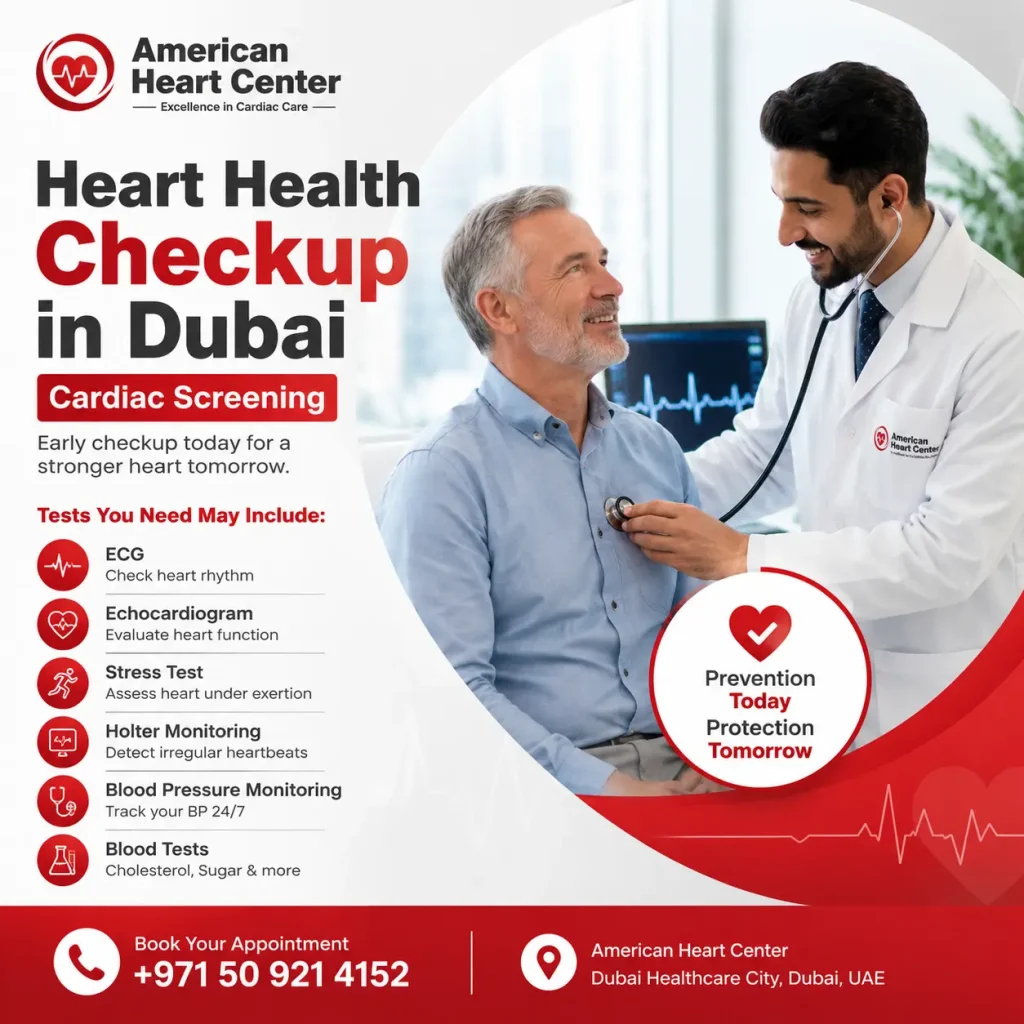
At American Heart Center Dubai, a Heart Health Checkup in Dubai can include a medical consultation, physical examination, cardiovascular risk assessment, ECG, echocardiography, stress testing, Holter monitoring, blood pressure monitoring, and other diagnostic tests when clinically appropriate. The recommended tests depend on your symptoms, medical history, risk factors, and overall heart health.
What Is a Heart Health Checkup?
A heart health checkup is an evaluation of your cardiovascular health. It does not mean every person needs every available cardiac test.
A cardiologist considers your age, symptoms, medical history, family history, lifestyle, and existing risk factors before deciding which tests are appropriate.
A routine assessment may include blood pressure measurement, a review of cholesterol and blood sugar levels, physical examination, and discussion of lifestyle factors. Additional cardiac tests may be recommended when there are symptoms or specific risk factors.
The goal is to identify potential concerns early and create an appropriate prevention or treatment plan.
Why Regular Heart Checkups Matter
Heart disease can develop gradually. Some people may not notice symptoms until a condition has progressed.
A cardiovascular checkup gives a doctor an opportunity to evaluate factors that may increase your future risk. These can include:
- High blood pressure
- High cholesterol
- Diabetes
- Smoking
- Excess weight
- Physical inactivity
- Family history of cardiovascular disease
- Previous heart problems
- Abnormal heart rhythm
- Persistent chest discomfort or shortness of breath
Early identification does not guarantee that a heart problem can be prevented, but it can help you and your doctor address modifiable risk factors and investigate concerning symptoms.
Common Tests Included in a Heart Checkup
The tests you need depend on your individual situation. Some people may only require basic cardiovascular assessment, while others may need more detailed testing.
1. Blood Pressure Check
High blood pressure often produces no obvious symptoms. Regular measurement is therefore an important part of cardiovascular health monitoring.
If blood pressure readings remain high, your doctor may recommend additional monitoring and appropriate management.
American Heart Center provides blood pressure monitoring as part of its cardiac diagnostic services.
2. Cholesterol and Blood Tests
Blood tests can help evaluate factors associated with cardiovascular risk.
A lipid profile may measure cholesterol levels such as LDL, HDL, and triglycerides. Blood glucose and HbA1c can also help identify diabetes or poor blood sugar control.
American Heart Center’s published cardiac screening packages include lipid profile, HbA1c, kidney function, electrolytes, liver function, and other laboratory assessments depending on the package.
Your doctor can determine which blood tests are appropriate based on your medical history and risk factors.
3. Electrocardiogram
An ECG or EKG records the electrical activity of your heart. As part of a Heart Health Checkup in Dubai, an ECG can help doctors evaluate your heart rate and rhythm and identify certain electrical abnormalities. An ECG may be recommended when someone experiences symptoms such as palpitations, dizziness, chest discomfort, or shortness of breath.
American Heart Center provides ECG testing as part of its cardiac diagnostic services. An ECG is quick and non-invasive, although a normal ECG does not rule out every type of heart disease.
4. Echocardiogram
An echocardiogram uses ultrasound to create detailed images of the heart. It can help assess the heart’s structure and function, including the chambers, valves, and pumping function. As part of a Heart Health Checkup in Dubai, an echocardiogram may be recommended to provide a closer look at how the heart is working. American Heart Center provides echocardiography and advanced echocardiography services as part of its cardiac care. A doctor may recommend an echocardiogram when you have symptoms, abnormal examination findings, or concerns about structural or functional heart problems.
5. Exercise Stress Test
An exercise stress test evaluates how the heart responds when your body is working harder.
During the test, heart rate, rhythm, blood pressure, and other clinical information are monitored while you exercise under medical supervision.
Stress testing may help evaluate certain symptoms and assess how the cardiovascular system responds to exertion. American Heart Center offers exercise stress testing and stress echocardiography.
6. Holter Monitoring
Some heart rhythm problems do not occur during a short ECG.
A Holter monitor records heart activity continuously over an extended period, often 24 hours or longer depending on the monitoring plan.
It can be useful for evaluating intermittent palpitations, dizziness, fainting, or suspected rhythm abnormalities.
American Heart Center provides 24-hour Holter monitoring.
7. 24-Hour Blood Pressure Monitoring
A single blood pressure reading may not show your typical blood pressure throughout the day.
Ambulatory blood pressure monitoring records readings at intervals over an extended period. This can provide a more complete picture of blood pressure patterns.
American Heart Center offers 24-hour ambulatory blood pressure monitoring.
When Should You Get a Heart Checkup?
There is no single testing schedule that applies to everyone. Your need for cardiac screening depends on your age, medical history, risk factors, symptoms, and previous test results.
You should consider discussing a heart health assessment with a qualified doctor if you have:
High Blood Pressure
Persistent hypertension increases cardiovascular risk and should be monitored and managed appropriately.
High Cholesterol
High LDL cholesterol can contribute to plaque buildup in arteries. Your doctor can assess your overall cardiovascular risk and determine whether lifestyle changes, medication, or further testing may be appropriate.
Diabetes
Diabetes can increase the risk of cardiovascular disease. Regular monitoring and risk management are important for people living with diabetes.
Family History of Heart Disease
A strong family history can be an important part of cardiovascular risk assessment. Tell your doctor if close family members have experienced heart disease, heart attacks, or other cardiovascular conditions at a relatively young age.
Smoking
Smoking increases cardiovascular risk. If you smoke, discuss your cardiovascular risk and smoking cessation options with your doctor.
Extra weight
Excess weight can contribute to high blood pressure, diabetes, sleep problems, and other cardiovascular risk factors.
Reduced Exercise
A sedentary lifestyle can contribute to several cardiovascular risk factors. Your doctor can help determine a safe and appropriate activity plan.
Symptoms That Should Not Be Ignored
Some symptoms require medical evaluation rather than waiting for a routine checkup.
These may include:
- Chest pain or pressure
- Shortness of breath
- Unexplained dizziness
- Fainting
- Persistent or unusual palpitations
- Unexplained fatigue
- Reduced exercise tolerance
- Swelling in the legs
- Pain or pressure that occurs during physical activity
Chest pain, severe shortness of breath, fainting, or other sudden severe symptoms can indicate a medical emergency. Seek emergency medical care immediately rather than waiting for a routine cardiology appointment.
Heart Screening for Adults in Dubai
People living in Dubai have access to a wide range of preventive and diagnostic healthcare services. A heart screening can be particularly useful when someone has multiple cardiovascular risk factors or wants a professional assessment of their heart health.
American Heart Center Dubai provides preventive cardiac screening and cardiovascular risk assessment alongside diagnostic services. The center evaluates medical history, family history, and lifestyle factors when developing an appropriate care plan.
Heart Checkup Packages in Dubai
A comprehensive heart checkup may combine consultation, cardiac tests, and laboratory investigations.
American Heart Center currently lists several cardiology screening packages. Its published packages include combinations of medical consultation, physical examination, ECG, echocardiogram, exercise treadmill testing, carotid ultrasound, laboratory testing, and additional monitoring depending on the selected package.
However, a package should not replace individualized medical advice. The most appropriate tests depend on your health profile and clinical needs.
How to Prepare for a Heart Checkup
Preparation depends on which tests you are having.
Before your appointment, keep a record of your current medications and any relevant medical reports. Make a note of symptoms, when they occur, and whether they are related to exercise, meals, stress, or rest.
Tell your doctor about previous heart tests, surgeries, medical conditions, allergies, and your family history of cardiovascular disease.
If you are scheduled for a blood test or exercise stress test, follow the specific preparation instructions provided by your healthcare team.
What Happens During a Heart Consultation?
A cardiology consultation usually starts with a discussion of your symptoms and medical history.
Your doctor may ask about:
- Current symptoms
- Blood pressure
- Cholesterol
- Diabetes
- Smoking
- Exercise
- Diet
- Medications
- Family history
- Previous medical conditions
- Previous cardiac investigations
The doctor may then perform a physical examination and determine whether additional testing is necessary.
American Heart Center states that its cardiologists review medical history, family history, and lifestyle factors when evaluating patients and developing treatment options.
Heart Health Checkup for Busy Professionals
People with demanding work schedules may overlook routine health assessments.
Long working hours, limited physical activity, stress, poor sleep, and unhealthy eating habits can make cardiovascular risk management more difficult.
American Heart Center also offers Executive Physicals in Dubai, which include medical history review, physical examination, cardiovascular fitness evaluation, preventive screening, medication review, and lifestyle assessment.
A preventive health assessment can help busy professionals make their cardiovascular health part of their regular healthcare routine.
How Often Should You Have a Heart Checkup?
The answer depends on your health.
A healthy person with no significant risk factors may not need extensive cardiac testing every year. Someone with hypertension, diabetes, high cholesterol, previous heart disease, symptoms, or a strong family history may require more frequent monitoring.
Rather than following a fixed testing schedule, discuss your personal cardiovascular risk with a healthcare professional.
Choose a Heart Specialist in Dubai
Choosing a cardiology clinic with appropriate diagnostic facilities can make the evaluation process more convenient.
American Heart Center Dubai Healthcare City provides outpatient cardiac services including ECG, echocardiography, exercise stress testing, Holter monitoring, blood pressure monitoring, cardiovascular screening, and other diagnostic services.
The center is led by Dr. Naeem Tareen, who is listed by American Heart Center as an American Board-certified cardiologist and Fellow of the American College of Cardiology.
Take the Next Step for Your Heart Health
A heart health checkup is not about taking every possible test. It is about understanding your cardiovascular risk and getting the right evaluation when it is appropriate.
If you have risk factors, persistent symptoms, or concerns about your heart health, speak with a qualified cardiologist. Early assessment can help identify issues that may otherwise go unnoticed and provide an opportunity to manage cardiovascular risk.
For people looking for a heart health checkup in Dubai, American Heart Center provides cardiac consultation, preventive screening, diagnostic testing, and ongoing cardiovascular care in Dubai Healthcare City.
Frequently Asked Questions
What is included in a heart health checkup?
It depends on your individual health needs. A checkup may include medical history, physical examination, blood pressure assessment, blood tests, ECG, and additional cardiac testing when clinically appropriate.
Is an ECG enough to check heart health?
No. An ECG evaluates the heart’s electrical activity but does not assess every aspect of cardiovascular health. Other tests may be needed depending on symptoms and risk factors.
Who should get a cardiac screening in Dubai?
People with cardiovascular risk factors, relevant symptoms, a personal history of heart disease, or a strong family history should discuss appropriate screening with a healthcare professional.
Is a heart checkup necessary if I feel healthy?
Feeling healthy does not always rule out cardiovascular risk factors. Regular healthcare visits can help identify issues such as high blood pressure or high cholesterol that may have few or no obvious symptoms.
Where can I get a heart health checkup in Dubai?
American Heart Center provides cardiac consultations, preventive screening, ECG, echocardiography, stress testing, Holter monitoring, blood pressure monitoring, and other cardiovascular diagnostic services in Dubai Healthcare City.