
What You Should Know Before Panicking About Chest Discomfort
A stabbing pain in the chest can instantly create panic. Most people immediately think about a heart attack, while others dismiss it as stress, acidity, or muscle strain. The reality lies somewhere in between. Some causes are harmless and temporary, while others need immediate medical attention.
Chest pain remains one of the most common reasons people seek emergency care worldwide. In a fast-moving city like Dubai, where people juggle demanding jobs, long work hours, heat exposure, and busy lifestyles, symptoms involving chest discomfort should never be ignored.
The good news is that not every sharp chest pain means a severe heart condition. Understanding possible causes and warning signs can help people make smarter decisions and seek medical care at the right time.
This guide explains everything Dubai residents should know about a stabbing pain in the chest, including symptoms, causes, diagnosis methods, risk factors, treatment approaches, and prevention tips.
What Is a Stabbing Pain in the Chest?
A stabbing pain in the chest is usually a sudden, sharp sensation that feels like a needle, knife, or jolt inside the chest area. It can appear for a few seconds or continue for several minutes.
Unlike pressure-like pain often linked to classic heart symptoms, stabbing pain feels more localized and sharper.
People may describe it as:
- A sudden piercing pain
- Sharp chest discomfort
- Needle-like sensation
- Pain while breathing deeply
- A quick electric-shock feeling
- A sudden chest jab
Some experience pain only once, while others notice repeated episodes throughout the day. The location and timing of pain often provide clues to healthcare professionals.
Is a Stabbing Pain in the Chest Always Related to the Heart?
No. Sharp chest pain is not always caused by heart disease.
Many people automatically assume chest pain equals a heart attack. However, the chest contains muscles, nerves, lungs, ribs, blood vessels, and digestive organs. Problems affecting any of these areas can trigger symptoms.
Heart-related pain often feels different. People commonly describe cardiac discomfort as:
- Tightness
- Pressure
- Heavy sensation
- Squeezing
- Fullness in the chest
However, symptoms differ from person to person.
Fact: According to the American Heart Association (AHA), women and people with diabetes may experience unusual or less typical heart symptoms. This variation explains why chest symptoms should not be self-diagnosed.
What Are the Most Common Causes of a Stabbing Pain in the Chest?
Doctors generally divide chest pain into cardiac and non-cardiac causes.
Several conditions can create sharp chest discomfort.
Common causes include:
- Muscle strain
- Acid reflux
- Anxiety
- Lung conditions
- Costochondritis
- Heart disease
- Pulmonary embolism
- Rib injuries
Let’s examine these causes individually.
Can Muscle Strain Cause Sharp Chest Pain?
Yes. Muscle strain remains one of the most frequent causes of chest pain. The muscles surrounding the chest wall support breathing, lifting, movement, and posture. Overuse or sudden strain can create inflammation and pain.
Pain often develops after:
- Weightlifting
- Intense workouts
- Heavy lifting
- Sudden twisting movement
- Sports injuries
Signs include:
- Pain worsening with movement
- Tenderness when touching the area
- Pain during stretching
- Improvement during rest
Dubai has a growing fitness culture, and many people rapidly increase workout intensity without gradual progression. In some cases, a stabbing pain in the chest after a gym session is not related to the heart at all it may simply be muscles protesting yesterday’s enthusiasm.
Could Costochondritis Be Responsible?
Yes. Costochondritis causes inflammation where ribs connect to the breastbone.
It commonly creates:
- Sharp pain
- Tenderness
- Pain while breathing deeply
- Increased pain when pressing the chest
Doctors often identify it during physical examination.
Fact: Studies published in family medicine research show that costochondritis accounts for a notable percentage of outpatient chest pain complaints. In many cases, a stabbing pain in the chest caused by this condition can feel alarming, but it often improves with conservative treatment and proper care.
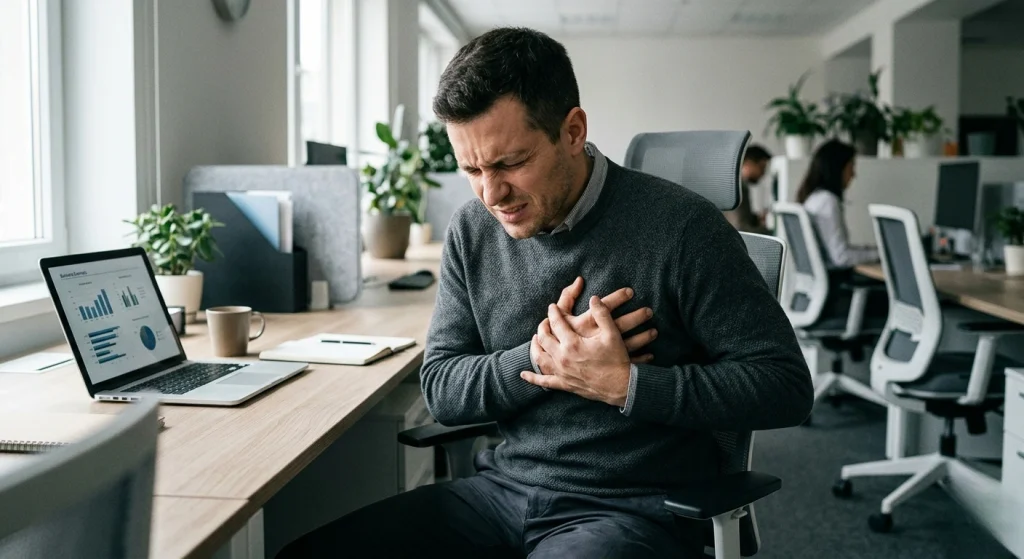
Can Acid Reflux Feel Like a Stabbing Pain in the Chest?
Absolutely. Digestive problems frequently imitate heart symptoms. Gastroesophageal reflux disease (GERD) occurs when stomach acid moves upward into the esophagus. Since the esophagus sits close to the chest cavity, discomfort can feel cardiac.
Symptoms include:
- Burning sensation
- Sharp pain after meals
- Sour taste
- Bloating
- Symptoms while lying down
Fact: The National Institute of Diabetes and Digestive and Kidney Diseases estimates GERD affects approximately 20% of adults in many populations.
Dubai’s diverse food culture includes spicy dishes, rich meals, and late-night dining habits that may contribute to digestive discomfort.
Can Anxiety and Stress Cause Chest Pain?
Yes, and it happens more often than many people realize.
Stress affects both mind and body.
Anxiety can produce physical symptoms including:
- Fast heartbeat
- Tight chest muscles
- Sharp discomfort
- Dizziness
- Sweating
- Tingling
Fact: The World Health Organization reports anxiety disorders affect hundreds of millions of people globally.
Dubai’s highly competitive work environments, demanding schedules, and long working hours may contribute to elevated stress levels. The body sometimes reacts to emotional pressure like it received an emergency memo nobody remembers sending.
Could Lung Conditions Cause a Stabbing Pain in the Chest?
Lung-related problems often produce pain that worsens while breathing.
Examples include:
Pleurisy
Pleurisy occurs when tissues surrounding the lungs become inflamed.
Symptoms include:
- Sharp pain during breathing
- Cough
- Discomfort while sneezing
Pneumonia
Chest discomfort may accompany lung infections.
Additional symptoms include:
- Fever
- Chills
- Cough
- Fatigue
Pulmonary Embolism
A blood clot reaching the lungs creates a serious emergency.
Symptoms may include:
- Sudden severe pain
- Difficulty breathing
- Rapid heart rate
- Dizziness
Fact: According to the Centers for Disease Control and Prevention, pulmonary embolism contributes to significant emergency hospital admissions worldwide. Immediate care becomes essential.
Can Heart Problems Cause a Stabbing Pain in the Chest?
Although many heart problems produce pressure-like symptoms, some patients report sharp discomfort.
Conditions may include:
Angina
Reduced blood flow to the heart causes pain during activity.
Heart Attack
Blocked arteries reduce oxygen delivery.
Warning symptoms may include:
- Chest pressure
- Pain spreading to arms
- Sweating
- Nausea
- Breathlessness
Pericarditis
Inflammation around the heart can create stabbing pain. Pain sometimes improves when sitting forward.
Fact: Cardiovascular diseases remain the leading global cause of death according to World Health Organization estimates, accounting for around 17.9 million deaths each year.
Can Dubai Weather Affect Chest Symptoms?
Extreme temperatures and dehydration may contribute indirectly. Dubai summers regularly experience intense heat levels.
Dehydration can trigger:
- Rapid heartbeat
- Fatigue
- Muscle cramping
- Dizziness
- Weakness
Fact: UAE health authorities repeatedly encourage hydration awareness during summer due to heat-related risks.
Outdoor workers and active individuals should maintain fluid intake.
The body runs efficiently with hydration. Skip enough water, and it starts filing complaints.
What Symptoms Require Immediate Medical Attention?
Some warning signs should never be ignored. Seek emergency medical care if chest pain appears alongside:
- Severe shortness of breath
- Sweating
- Fainting
- Blue lips
- Sudden weakness
- Jaw pain
- Arm pain
- Irregular heartbeat
Pain intensity alone does not determine seriousness. A mild symptom can sometimes represent a severe condition.
How Do Doctors Diagnose Chest Pain in Dubai?
Healthcare providers first focus on excluding dangerous causes.
Evaluation usually begins with detailed questions:
- Where is the pain located?
- When did symptoms begin?
- What makes it worse?
- Does activity trigger pain?
Doctors may recommend:
Electrocardiogram (ECG)
Measures electrical activity of the heart.
Blood Tests
Cardiac biomarkers help identify heart damage.
Chest X-ray
Evaluates lungs and surrounding structures.
Echocardiogram
Assesses heart movement and function.
CT Imaging
Provides detailed internal views.
Fact: Dubai healthcare facilities continue investing heavily in advanced imaging and cardiovascular technologies.
Early diagnosis improves treatment outcomes.
Who Faces Greater Risk for Serious Chest Conditions?
Several factors increase risk.
These include:
Smoking
Smoking damages blood vessels and heart tissue.
Diabetes
Fact: International Diabetes Federation estimates the Middle East region has some of the world’s highest diabetes prevalence rates.
High Blood Pressure
Uncontrolled pressure strains arteries.
Obesity
Excess weight increases cardiovascular stress.
Family History
Genetics influence risk levels.
Physical Inactivity
Sedentary lifestyles contribute significantly.
Fact: World Health Organization recommendations suggest adults achieve at least 150 minutes of moderate exercise weekly.
How Is a Stabbing Pain in the Chest Treated?
Treatment depends entirely on the underlying cause.
Doctors may recommend:
Muscle strain is usually managed with:
rest, anti-inflammatory medications, and physical therapy to reduce inflammation and support recovery.
GERD-related symptoms are treated with:
dietary changes and acid-control medications that help reduce stomach acid and prevent reflux.
Anxiety-related chest pain improves with:
stress management techniques, counseling, and healthy lifestyle adjustments.
Heart-related conditions require:
cardiac medications, close monitoring, and in some cases specialized medical procedures.
Lung-related conditions are treated using:
antibiotics, oxygen support, or hospital-based care depending on severity.
Self-treatment without proper medical evaluation can delay correct diagnosis and appropriate care.
How Can Dubai Residents Reduce Chest Health Risks?
Prevention matters.
Several lifestyle habits improve overall heart and chest health.
Stay Active
Regular movement supports circulation.
Drink Enough Water
Hydration becomes especially important in warm climates.
Manage Stress
Sleep and work-life balance matter.
Avoid Smoking
Fact: CDC research consistently identifies smoking as a major preventable risk factor for cardiovascular disease.
Eat Heart-Friendly Foods
Focus on:
- Fruits
- Vegetables
- Whole grains
- Lean proteins
Small habits create long-term benefits.
Understanding the Warning Signs
A stabbing pain in the chest can create immediate concern, especially when symptoms appear suddenly. While many cases result from harmless causes such as muscle strain, reflux, or stress, others may indicate serious conditions involving the heart or lungs. For people living in Dubai, lifestyle demands, climate factors, work stress, and existing health risks may influence symptoms.
Pay attention to warning signs. Persistent, severe, or unusual chest discomfort deserves professional evaluation. The body rarely sends alerts without a reason. Listening early often proves easier than fixing bigger problems later.
Frequently Asked Questions (FAQ)
Not always. Many causes involve muscles or digestion, but symptoms should still be assessed.
Yes. Age reduces risk but does not eliminate it.
Yes. Anxiety causes genuine body responses.
Yes. Fluid loss affects circulation and body function.
Recurring or unexplained chest pain should still be evaluated.